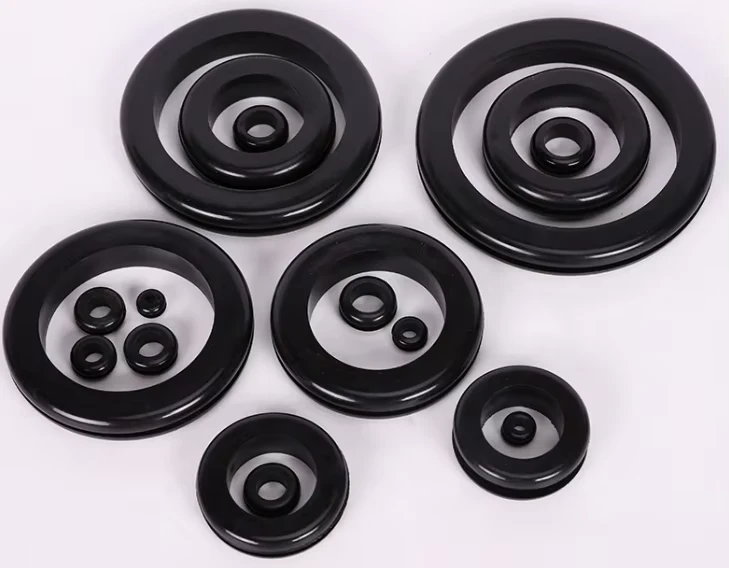
Production Methods of Rubber O-Rings
The production of rubber O-rings is a transformation process from “raw rubber” to “elastic sealing parts,” centered around three core stages: compound preparation, molding & vulcanization, and post-processing. Depending on product specifications, precision requirements, and batch sizes, several mainstream production methods have been derived:
1. Core Molding Processes (Three Mainstream Paths)
This is the critical step that determines the dimensional accuracy and production efficiency of O-rings:
Compression Molding – The Most Common
Process: Weighed rubber preforms (blanks) are manually or automatically placed into preheated metal mold cavities. A hydraulic press closes the mold under pressure, allowing the rubber to flow, fill the cavity, and cure.
Characteristics: Low tooling cost; suitable for multi-variety, small-batch, and large-batch standard parts. However, it involves relatively high labor intensity, and the parting line flash is thicker, requiring subsequent deflashing.
Injection Molding – High Efficiency & Precision
Process: Rubber compound is plasticized in the injection barrel and injected into a closed, heated mold under high pressure for rapid curing.
Characteristics: Highly automated, short cycle times, minimal flash (sometimes flashless), high dimensional accuracy, and excellent consistency. However, it requires significant investment in equipment and molds, making it suitable for high-volume, high-precision orders (e.g., automotive, electronics).
Transfer Molding – The Middle Ground
Process: The rubber compound is first placed in a transfer pot above the mold. A plunger forces the material through sprues and runners into the closed mold cavity.
Characteristics: A compromise between compression and injection. It produces less flash than compression molding and offers better dimensional accuracy, suitable for medium-volume orders with specific precision requirements.
2. Special Method for Large/Non-Standard O-Rings: Extrusion & Splicing
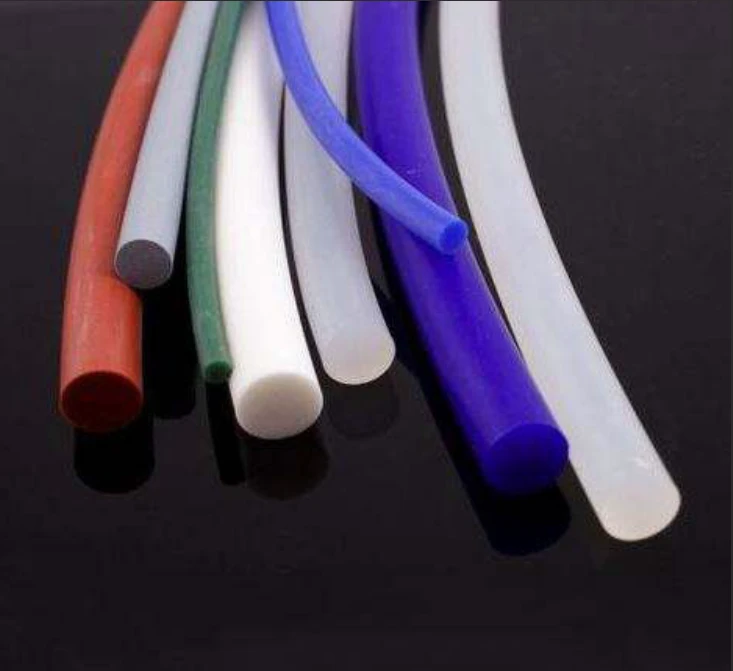
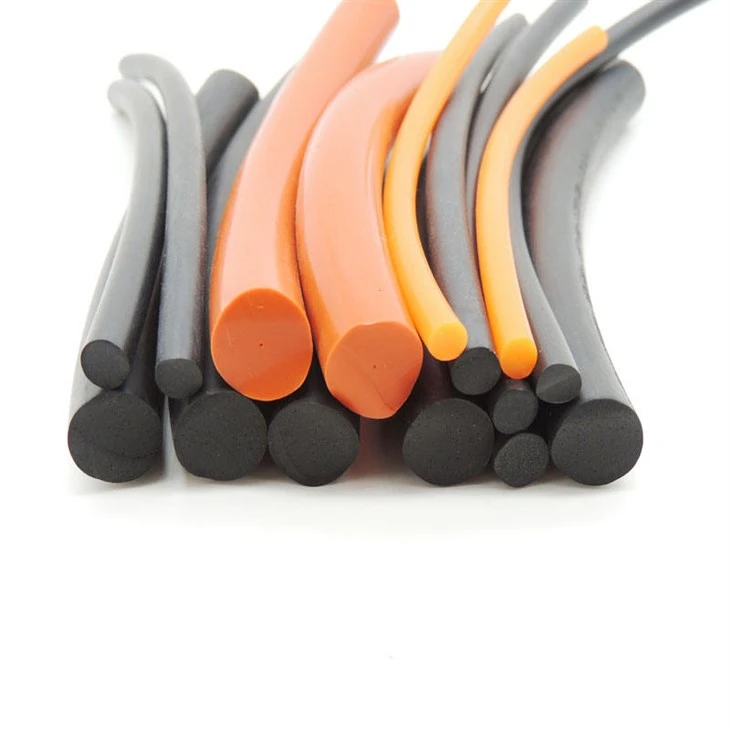
Process: Rubber is extruded into a continuous cord (rubber rope) via an extruder. The cord is cut to the required circumference and joined end-to-end using vulcanized splicing (butt, miter, or lap joints).
Application: Ideal for oversized diameters (e.g., several meters) or custom one-off O-rings without the need for expensive large molds. However, the sealing performance at the splice joint is typically slightly lower than that of a one-piece molded ring.
3. General Manufacturing Workflow (Using Compression/Injection as Examples)
Regardless of the molding method, the upstream and downstream processes are generally consistent:
Material Preparation & Mixing: Select the base polymer (e.g., NBR, FKM, VMQ) and mix it with curatives, carbon black, and oils in an internal mixer or on a two-roll mill to create a homogeneous “compound.”
Preforming (for Compression): The compound is pre-processed into rubber strips or pellets matching the weight and shape of the final O-ring to ensure accurate shot size.
Curing/Vulcanization: Inside the mold, under specific temperatures (typically 150°C–180°C+), pressure, and time, the rubber cross-links, transforming from a plastic state to an elastic state while forming the O-ring shape.
Deflashing: Removal of excess flash from the parting line. High-volume production typically uses cryogenic deflashing (freezing the flash with liquid nitrogen and blasting it off with media). High-precision parts may use water jet cutting, while small batches rely on manual trimming.
Post-Curing: For materials like FKM or VMQ, parts are baked in an oven for several hours to remove volatile byproducts and stabilize physical properties and dimensions.
Inspection & Packaging: Parts are inspected for dimensions (ID, CS), hardness, appearance, and compression set. Qualified products are cleaned and packaged.
| Material | EPDM, NBR, SBR, NR, Silicone(VMQ), Neoprene(CR), HNBR, XNBR, FKM, FFKM, FVMQ, FLAS, PTFE, PU, ECO, IIR, ACR, etc… |
| Certificate | ISO 90001:2008, TS16949, FDA, REACH, ROHS, SGS |
| Drawing Format | .stp / .step / .igs /.stl /.dwg / .pdf |
| Parameters | Inch, centimeter, millimeter, etc. |
| Function | Industrial parts /daily supply / Automotive/ Medical device, etc.. |
| MOQ | 50-1000pcs |
| Loading port | Hangzhou, Shanghai, Ningbo or as required |
| Shipment | By air mail, by sea, by express like DHL, Fedex, UPS, TNT, EMS |
| Payment terms | L/C, T/T, WEST cUNION, PAYPAL, ESCROW |
| Manufacturing | ODM & OEM Service |
| Sample lead time | 3-15 days |
| More Parts | Grommet, sleeve, feet, gasket, wheel, bellow, cap, dust cover, pad, washer, Strip, plug, stopper, grip, seal, bushing, bumper, blocks, and anti vibration mounts etc. |